
What Fire Leaves Behind
A house lost. A client's grieving process. A smaller, fiercer home.
SONOMA COUNTY
KINCAID FIRE 2019
I. THE FIRST HOUSE
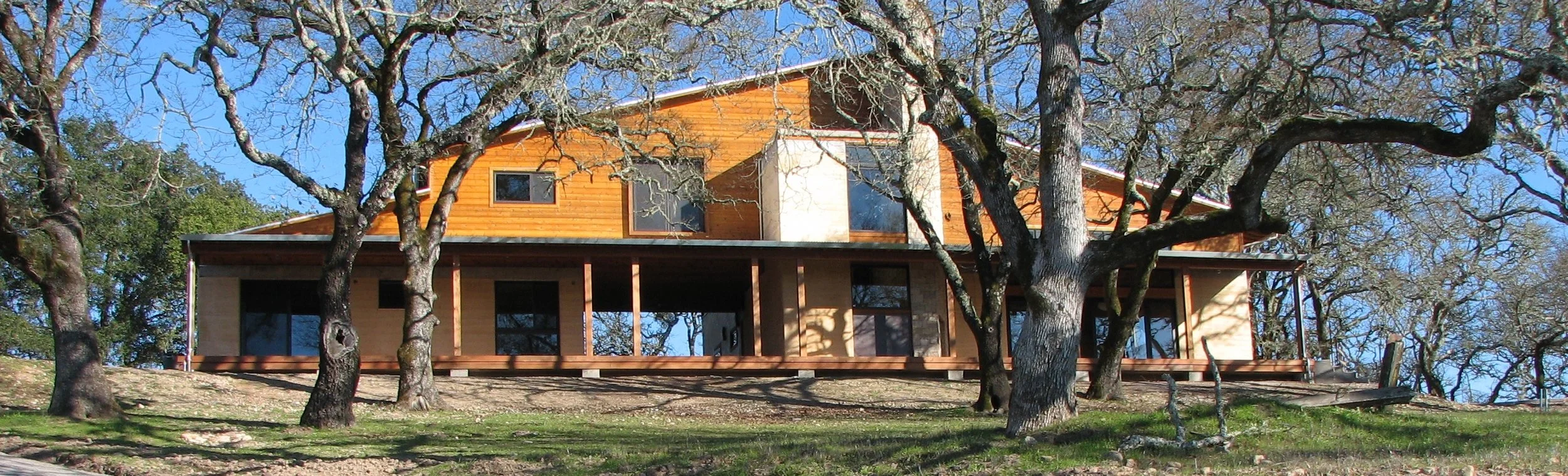
Twenty-five years ago, I designed a home for a woman I had come to know through a mutual friend. We had something in common before we had anything else. We were both raised in the Deep South.
The house I designed for her family sat in rolling oak hills of Sonoma County, where vineyards terrace the slopes and the summer heat presses down. The grip of winter, loosened by a comforting fire. I designed it without air conditioning — this home would be off-grid. The home would need to live on its own terms, in balance with the climate and landscape and the energy it could reliably produce.
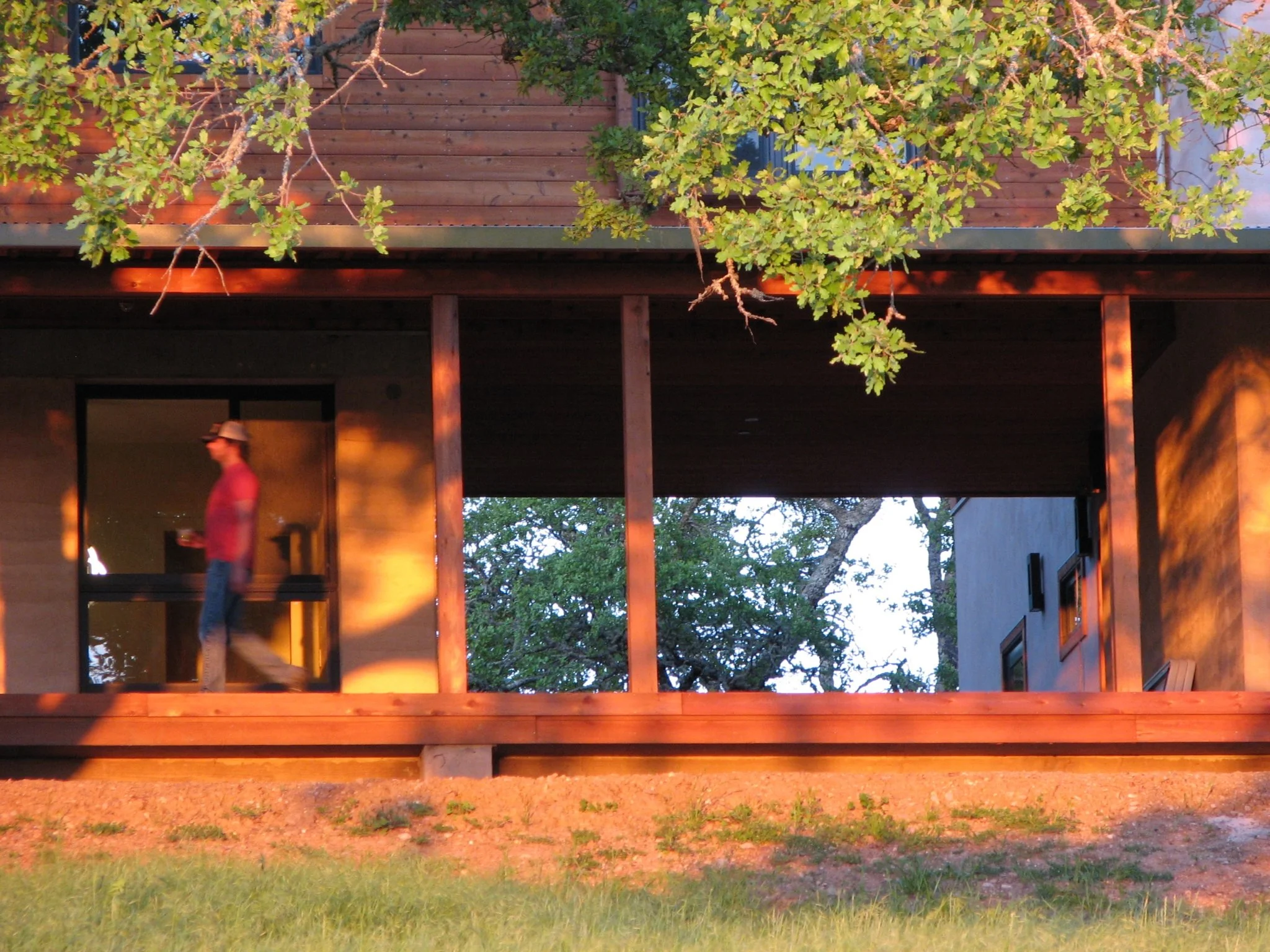
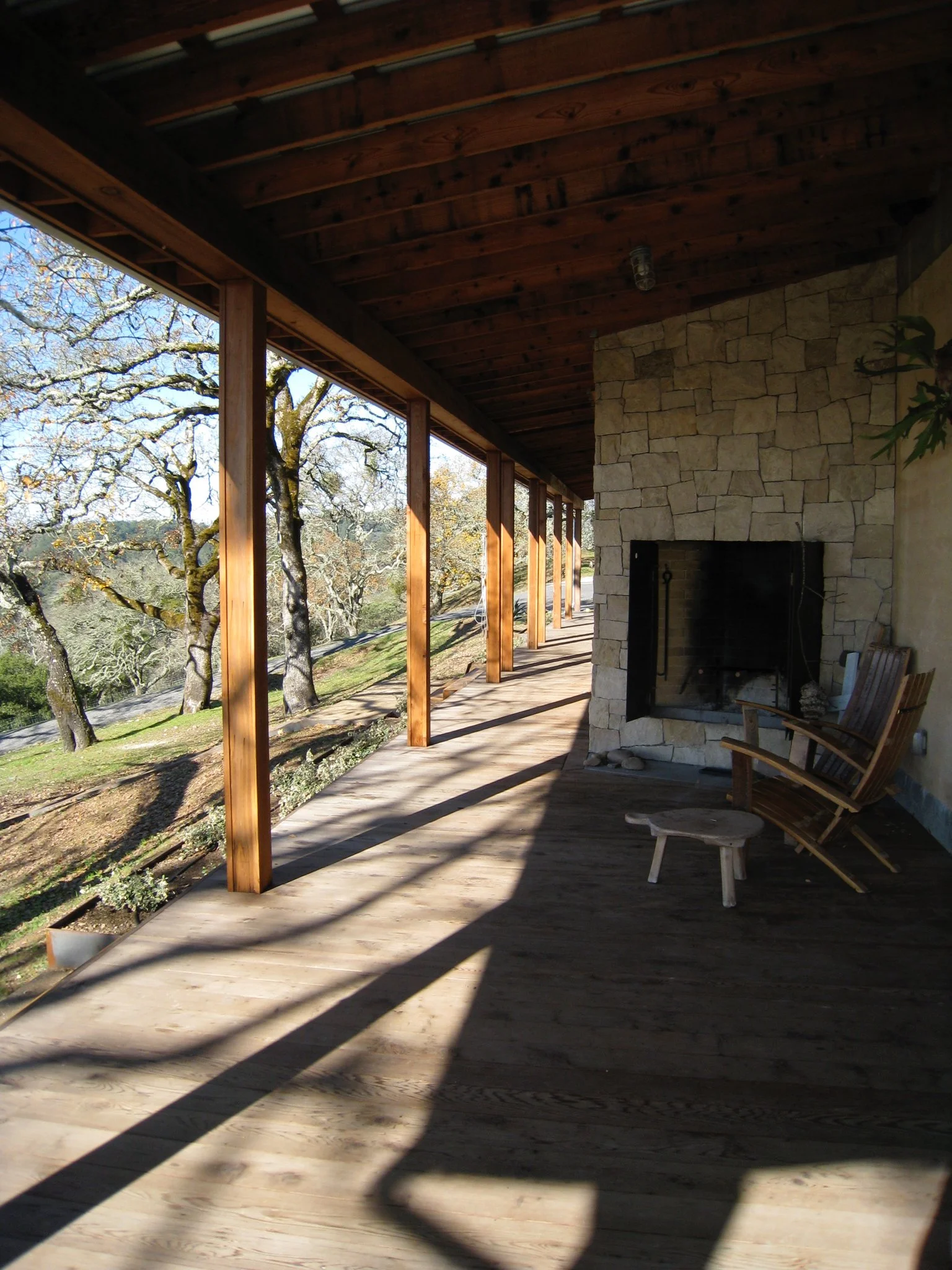
Long wooden porches and a dogtrot passage invited prevailing breezes through its heart. A cupola rose above the stair hall to vent the day's accumulated heat. The exterior walls were rammed earth: ancient, thick, tessellated by the color of the land itself.
It was a house that lived where it was. But it was not immune to what was to come.


II. THE KINCAID FIRE
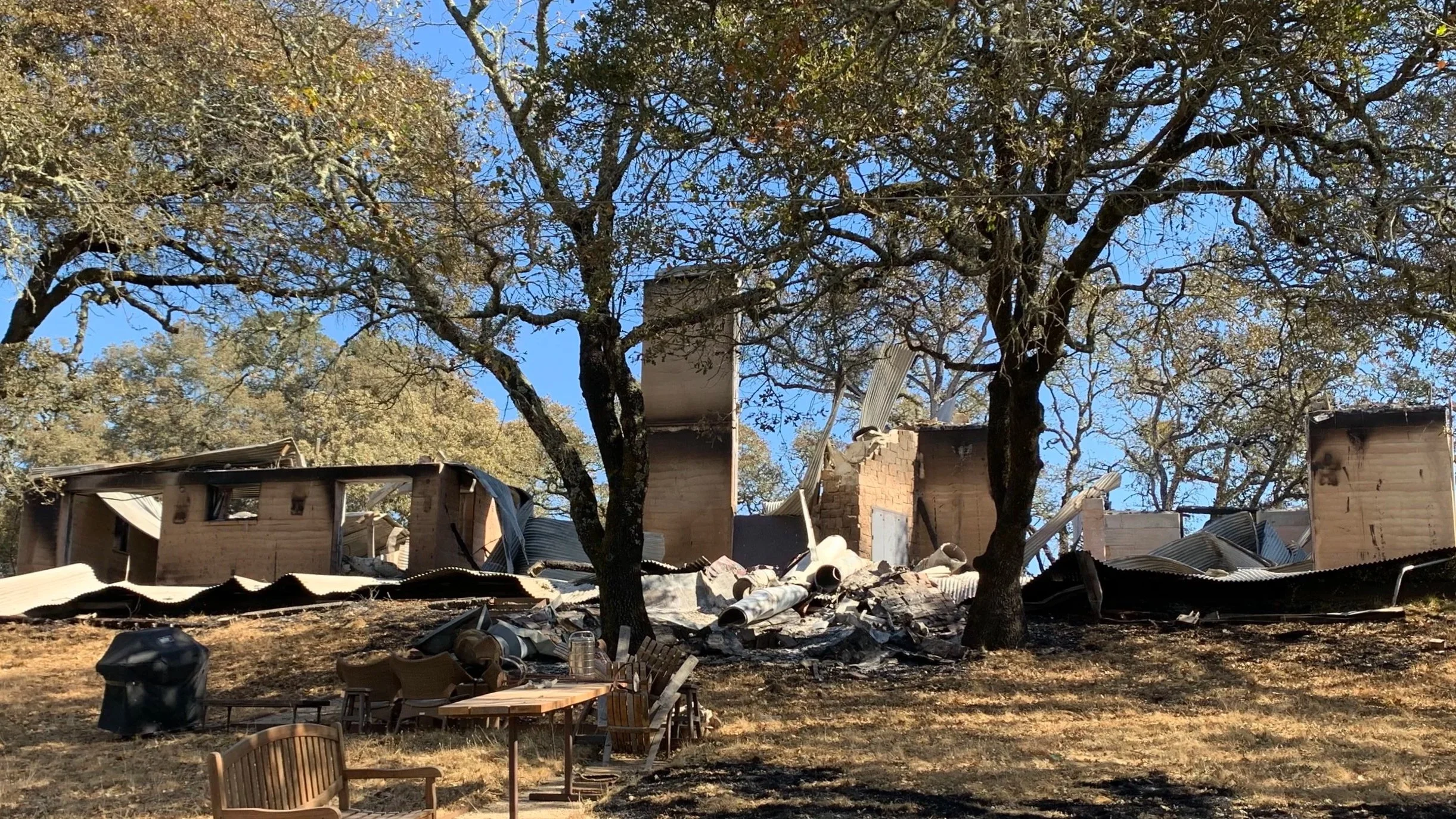
In October 2019, the Kincade Fire roared through Sonoma County with capricious indifference. As soon as I was able to visit the site, I stood in the ruin of the house and tried to understand what remained.
The corrugated metal roof — twisted and collapsed — laid over a bed of rubble and ash. The concrete slab beneath my feet was still hot. The smoldering landscape was singed to gray and umber. Some of the oaks appeared to have survived and some would die in the months that followed. Outbuildings on the property had escaped entirely. It was the strange character of wildfire. I surmised that the wooden eaves and porches were where the fire took hold.
The rammed earth walls were scorched, but they stood firm.
In the ashes, I found cast iron pans, and a bronze statue. A horse, ancient in form, modern in spirit. It had lost a leg. I carried it out.
III. THE YEARS BETWEEN
My client was devastated. Not only the house, but the accumulated texture of a life — irreplaceable family treasures, objects carried forward from other places and time to this place. She did not reach out to build for several years.
Grief has its own timeline, and a rebuilt home is never the same as one that was lost. When she finally reached out to build - what she wanted - was not a restoration of this loss. She wanted something smaller, something that gathered — a place for more intimate and personal enjoyment of friends and family.


IV. THE NEW PLACE
My first instinct was to save the rammed earth walls and reuse them in a new design. But, time and weather had worked on them in the intervening years. I came to understand that they also carried the memory of loss. They were monuments, not just walls. And, a new client program — smaller, more intimate — did not ask for them.
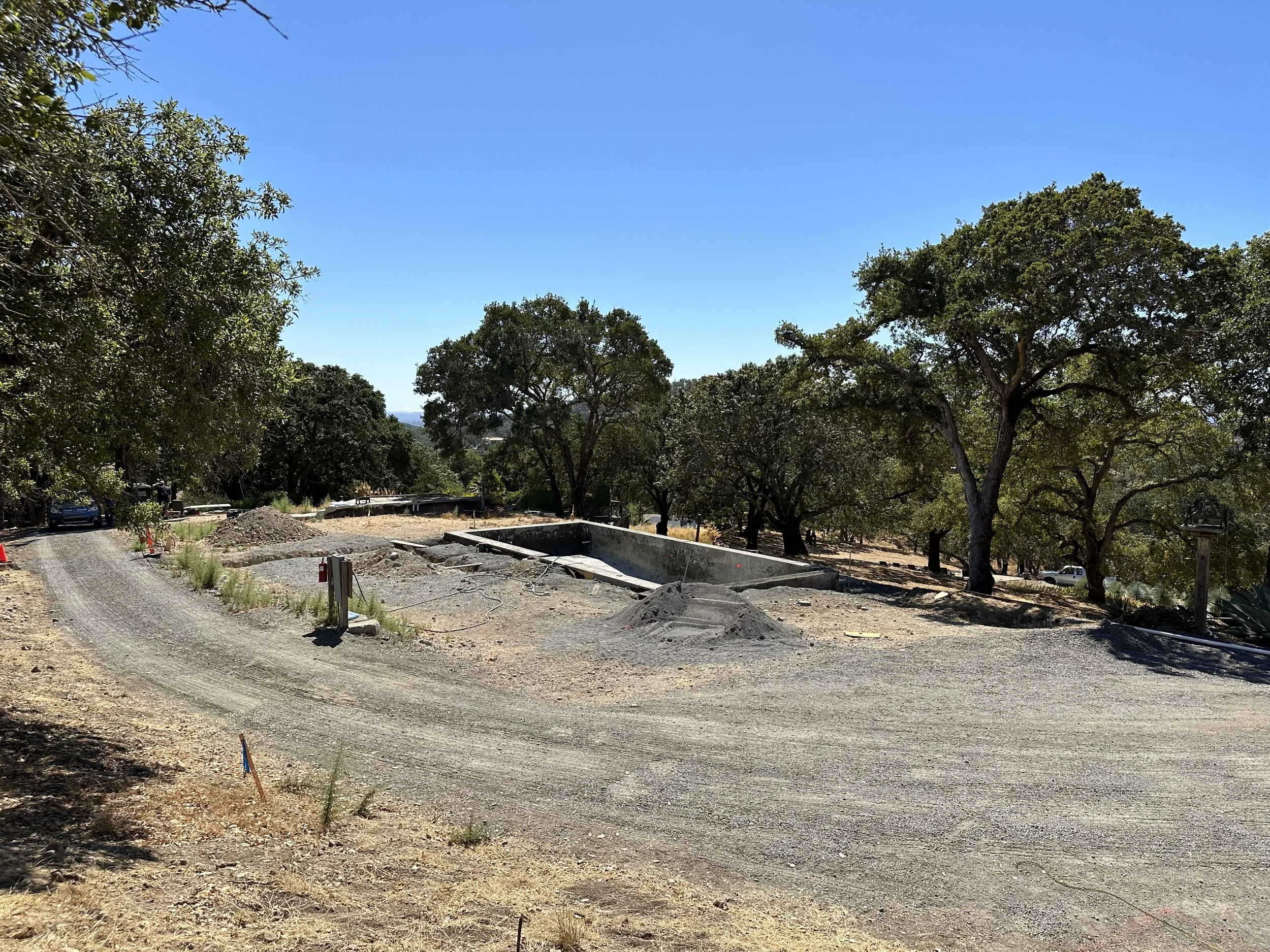
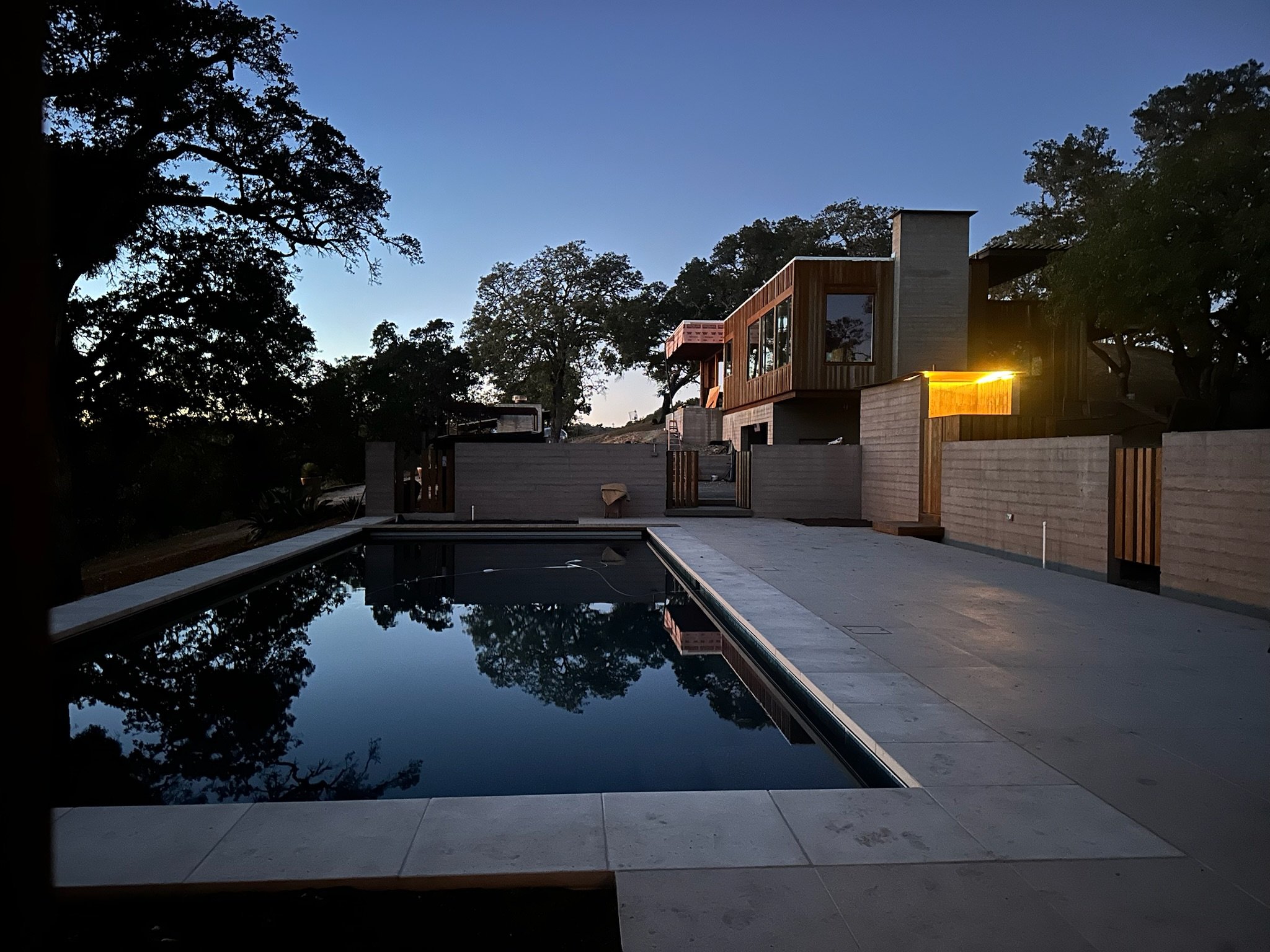
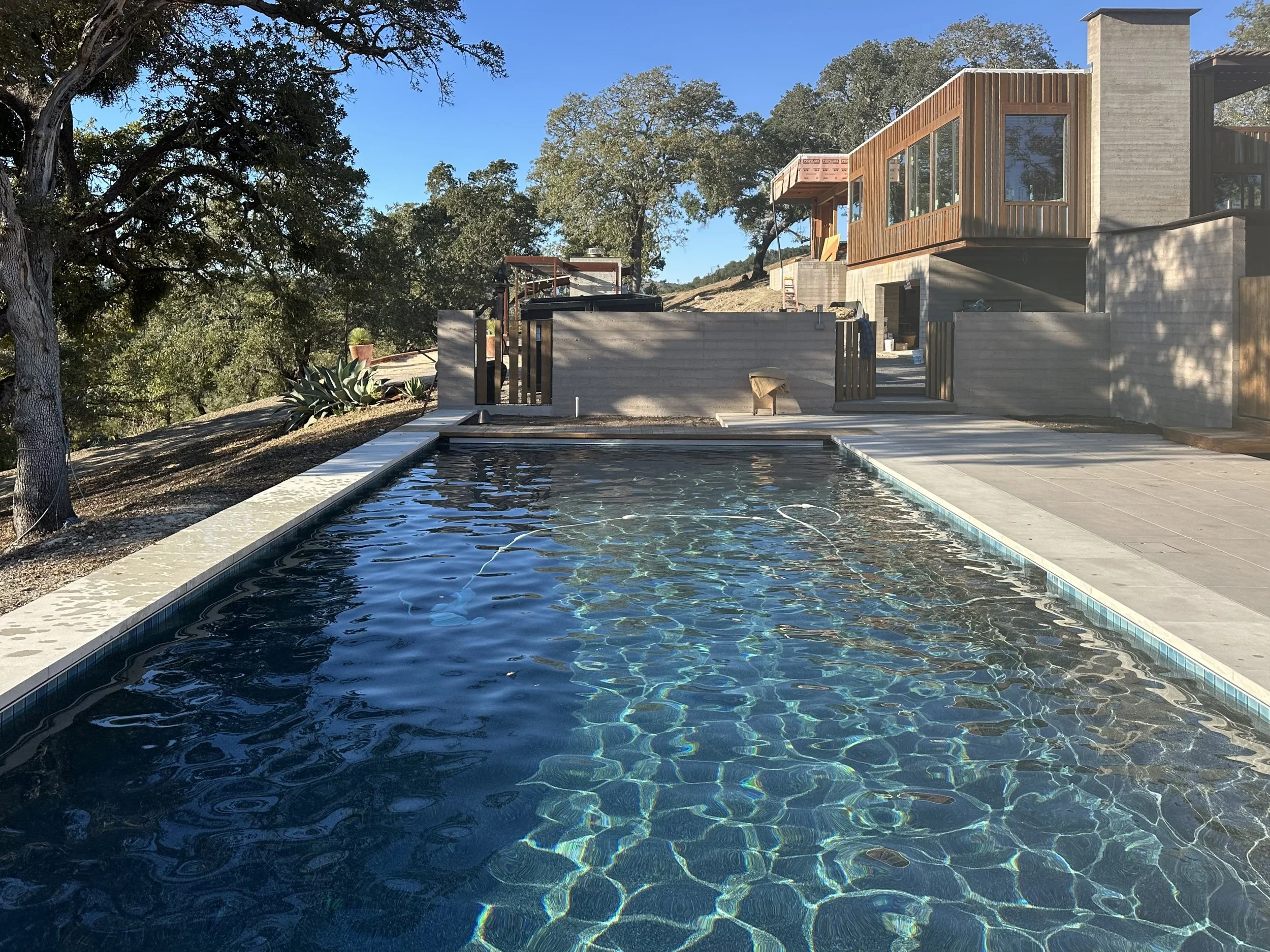
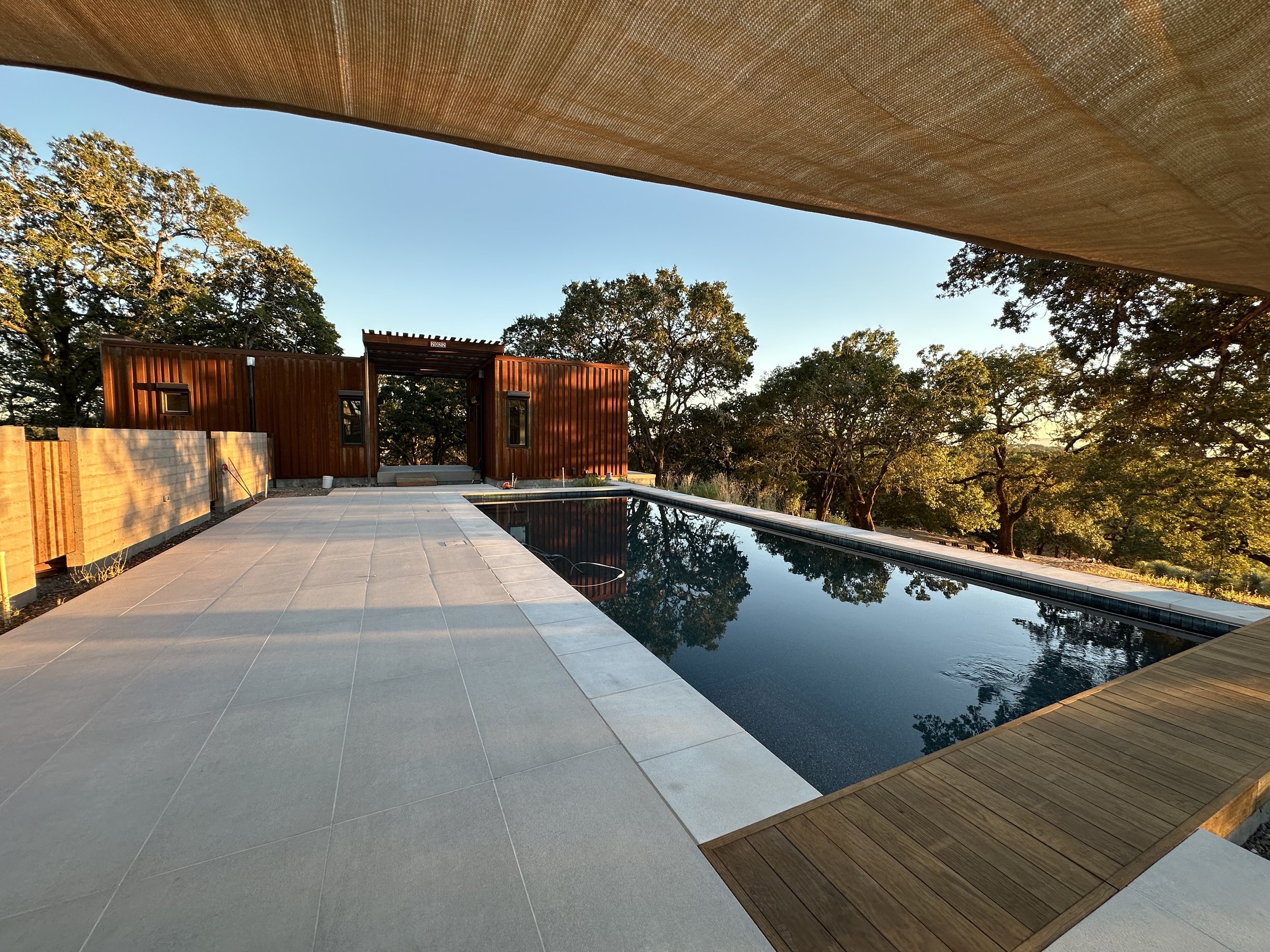
I decided that the pool would spring from the footprint of the home..
Where fire had taken almost everything, water would now collect. Around this pool, a new compound would gather: a one-bedroom main house, two nearby guest rooms, joined by “the Roost” , an outdoor dining pavilion that had survived the fire.
The design of the new structures faced a different world. This is Wildland-Urban Interface country — WUI designation — and the new c:ode required: Nothing combustible within five feet of a structure. No unscreened crawlspaces, no accessible attic voids where embers might nest. These new structures learned from the survivors of the fire.
I studied the Australian bushfire codes and American insurance institute videos of how homes succumb in wildfire: not from a wall of flame, but from the embers cast ahead — the whirlwind -the relentless, drifting advance party that finds every gap, every vent, every flammable threshold.
WUI is an aesthetic challenge. The vernacular vocabulary — the porch rail, the wooden eave, the board and batten — is precisely what fire exploits.


WUI as aesthetic challenge. Resilient self-reliance.
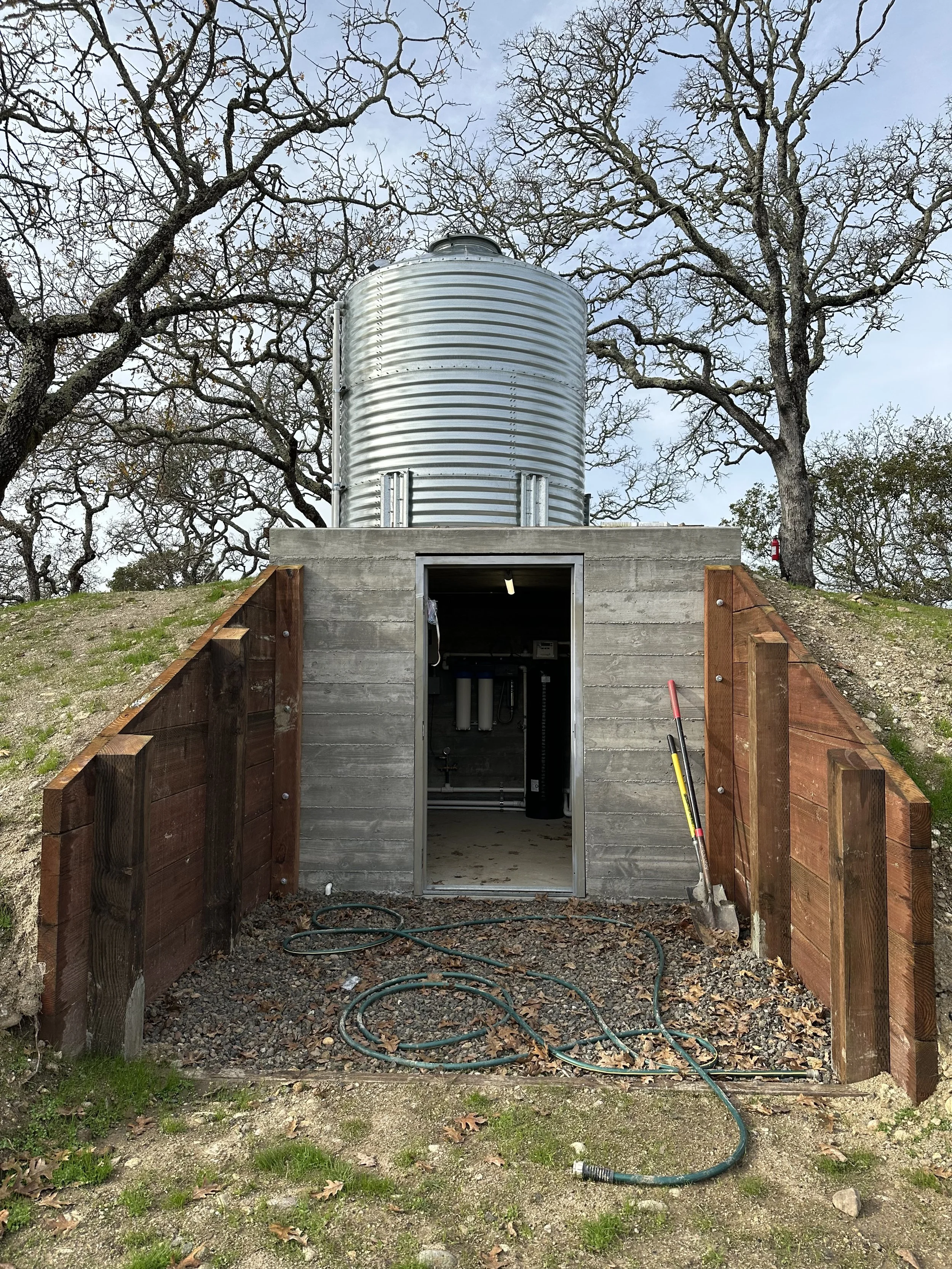
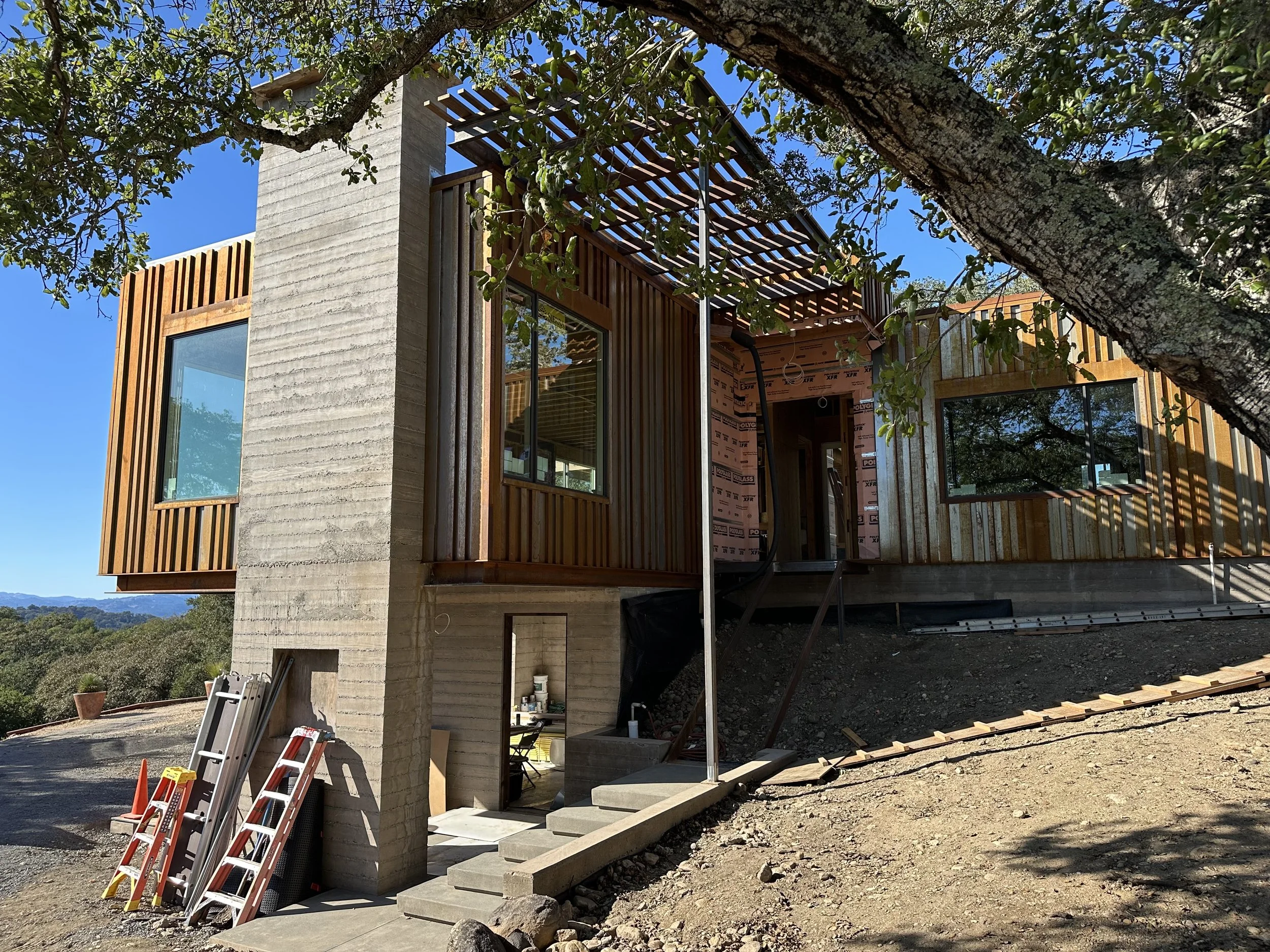
The new structures are clad in board form concrete, and clad in corrugated rusting steel in a random board effect. These honor the memory of wood, without the risk. Windows and doors are protected by metal shutters. The home is off-grid: electricity provided by the sun, is stored within a concrete cellar, water drawn from a well, is held in tanks that can feed exterior fire sprinkler system that can dampen the grounds should a fire approach.
Generous screen porches extend the interior living space. The porches are also protected by metal shutters and perforated steel screens — so that embers cannot gain a foothold there. It is on these porches, and the home’s interior that the familiarity of wood returned.
It is a fiercer home than the one before it. It is also, an honest one — wearing its armor plainly, making no pretense about it's context, or how it came to be.

V. 2026; YEAR OF THE FIRE HORSE
We found a bronze artisan to repair the lost leg. The repair is seamless — or nearly so.
The horse stands again, whole in her own way, carrying her history in a form that only those who know her story will read.
There is a niche in the concrete chimney at the front of the new house. That is where she will live: set into the wall, facing whatever comes.
ESTIMATED COMPLETION SUMMER OF 2026